Do I need to be a Vodun practitioner, African, or Black to join?
No. You do not need to practise Vodun, be African, or be Black to join us.
Everyone is welcome. Much like visiting a mosque, cathedral, temple, or other sacred space, you do not need to belong to the faith to respectfully experience and learn from its traditions.
We simply ask that you come with an open mind, genuine curiosity, and respect for the culture and practices you will encounter.
Why should I experience the festival with Art Continum?
This will be our fourth time organizing an experience around the Vodun Festival, and that familiarity matters.
The festival has its own rhythm. Processions move, schedules change, and many smaller ceremonies and festivities receive little public announcement. Visitors can easily be in Ouidah during the festival and still miss much of what is happening.
Our experience on the ground helps us understand how the festival moves and where to be. We also work with local partners, including individuals connected to Ouidah's royal family, who can provide additional cultural context and access throughout our time there.
Who is leading the Art Continum experience to the Vodun Festival?
The experience will be led by Kambey Akari, Chief Curator and Director of Art Continum.
Ghanaian by nationality, Kambey grew up across several West African countries within the francophone educational system. Growing up between languages, cultures, and traditions has given him a strong familiarity with the region and a perspective that extends beyond individual national borders.
Through Art Continum, his work explores African culture within its broader context, connecting art, history, traditions, places, and the communities that give them meaning. He has organized previous experiences around the Vodun Festival and has developed relationships in Ouidah that help provide participants with local insight, cultural context, and guidance throughout the festival.
Kambey is fully bilingual in English and French and will serve as the primary team lead throughout the journey from Accra to Ouidah and back.
He may also be supported by additional bilingual team members and local guides, depending on the final programme and group size, ensuring participants can comfortably navigate both English- and French-speaking environments throughout the journey.
Can I meet the group directly in Benin instead of travelling from Accra?
Yes. If you are travelling internationally or prefer to make your own way to Benin, you can meet us directly in Cotonou or Ouidah rather than beginning the journey in Accra.
International travellers can fly into Cotonou, where Benin's international airport is located. We can coordinate your transportation from the airport to Ouidah and back to the airport for your departure, allowing you to join the group without travelling through Ghana and Togo.
The programme rate remains the same whether you begin the journey with us in Accra or meet us in Benin. For participants arriving in Cotonou, the transportation that would otherwise form part of the Accra–Ouidah journey will instead include coordination of your airport transfers between Cotonou and Ouidah.
Once your participation is confirmed, we will coordinate arrival and departure details with you directly.
Will there be a day-by-day itinerary?
Yes. However, the final day-by-day itinerary is not yet available.
The Vodun Festival is a living cultural celebration, and many ceremonies, processions, performances, and official activities are confirmed closer to the festival dates. Rather than publish an itinerary based on assumptions, we prefer to build our programme around the confirmed schedule as it becomes available.
Successful applicants will receive the detailed itinerary as soon as the official programme is released and our activities are confirmed. In the meantime, participants can expect a combination of festival ceremonies and celebrations, cultural and historical sites, art and exhibitions, local experiences, and time to discover Ouidah.
What about language? Will I need to speak French?
No. Language should not be a barrier to participating in the experience.
Benin is a Francophone country, and French is widely used alongside local languages. Our Art Continum guides are fully bilingual in English and French, and some of the local guides and people we work with on the ground are bilingual as well.
Where conversations, explanations, or cultural interactions take place primarily in French, we will help translate and provide context for the group. This is particularly important during ceremonies and local encounters, where simply translating words may not fully explain the cultural meaning behind what is happening.
You do not need to speak French to join us. The purpose of having bilingual guides is to make the experience accessible, understandable, and culturally meaningful for both English- and French-speaking participants.
What currency should I bring, and will I need cash?
Benin uses the West African CFA franc (XOF). While there are ATMs in Ouidah and cards may be accepted at some hotels, restaurants, and larger establishments, cash remains the most practical form of payment, particularly at markets, food stalls, smaller shops, with local vendors, and during festival activities.
We recommend keeping a reasonable amount of CFA francs with you and, importantly, carrying smaller denominations. Vendors may not always have sufficient change for larger notes, especially during busy festival periods.
ATMs are available, but we recommend not relying exclusively on them, as availability, withdrawal limits, network issues, or your bank's international transaction policies can occasionally create difficulties.
You do not need to carry large amounts of cash at once. We will provide successful participants with additional practical guidance on money, ATMs, exchanging currency, and suggested cash amounts before departure.
Why do I need to apply?
You do not need Art Continum to attend the Vodun Festival. The festival itself is open to everyone.
The application is specifically for joining our group.
Art Continum is not a conventional travel and tour company. We are intentionally bringing together a small group of like-minded, curious people who can experience the festival together and hopefully build friendships and relationships that extend beyond the trip.
We want participants who are interested in engaging with the culture rather than simply ticking another destination off a bucket list.
What will the programme include?
The Vodun Festival extends throughout Ouidah and includes processions, sacred ceremonies, street celebrations, exhibitions, concerts, live music, food, cultural programming, networking, and smaller community festivities.
During the festival, much of Ouidah becomes part of the experience. Our programme will combine major festival events with smaller experiences and opportunities to discover the city.
Are we going for the entire week from January 2–9?
While the 2027 celebrations run from January 2–9, our current plan is to experience the closing portion of the festival, approximately Wednesday, January 6 through Saturday, January 9.
We believe these final days will offer a particularly concentrated period of ceremonies, celebrations, performances, and other programming.
What if I want to explore independently?
Absolutely. Although we have created a group programme, you are not required to spend every moment with the group. We understand that some participants may want time to wander through Ouidah, revisit a place that interested them, meet people, take photographs, attend another event, or simply experience the city at their own pace.
If you choose to explore independently, we ask that you remain reachable and follow a few basic safety and communication measures. You will be required to provide us with an emergency contact, obtain and register a local SIM card or otherwise maintain reliable local mobile connectivity, and check in with the Art Continum team at agreed times while away from the group.
We also ask that you let us know where you are generally heading and when you expect to return, particularly if you will be away in the evening or attending activities outside our scheduled programme.
Our objective is not to restrict your independence. It is to give participants the freedom to experience Ouidah in their own way while ensuring that someone on the ground knows how to reach you and can respond quickly if assistance is needed.
What is there beyond the Vodun processions and ceremonies?
A lot.
The festival is also an opportunity to discover Ouidah itself, a historic coastal city with extraordinary cultural significance.
Beyond the ceremonies, there are exhibitions, concerts, food, music, historical sites, local communities, and the opportunity to experience a city that takes on an entirely different energy during the festival.
Where will we stay?
We will stay in Ouidah itself, allowing you to experience the city throughout the festival, from the early-morning rhythms and processions to the celebrations that continue into the evening.
Our group will stay together in a spacious private home featuring 7 bedrooms, 16 beds, 7 bathrooms, a swimming pool, and a garden, offering a comfortable place to relax between activities while remaining close to the festival.
Double and single occupancy options are available, with single occupancy limited and subject to availability.
 The private villa
How are shared rooms arranged?
We strive to make every participant feel comfortable throughout the experience. Wherever possible, participants sharing a room will be paired with someone of the same sex.
Where this is not possible, we will speak with participants beforehand and ensure that everyone is paired with someone they are comfortable sharing with.
This is also one of the reasons participation is application-based. The application helps us understand each participant's preferences, interests, expectations, and travel style so we can make thoughtful rooming arrangements and create a group that is comfortable and compatible.
Will I get to meet the other participants before the trip?
Yes. Once participation has been confirmed, we will create a private group chat for all successful participants.
The group will provide an opportunity to introduce yourself, meet the people you will be travelling with, ask questions, and become familiar with the group before we depart. We will also use it to share important updates, preparation information, meeting points, itinerary details, and practical guidance leading up to the experience.
Because we intentionally keep the group small, we hope participants will begin getting to know one another before arriving in Ouidah, making the experience feel less like travelling with strangers and more like joining a small community for the journey.
How much will it cost?
The experience is $750 per person for double occupancy or $850 per person for single occupancy.
The package includes accommodation in Ouidah, round-trip transportation from Accra, private transportation throughout the programme, border-crossing costs, breakfast, selected activities, bilingual guides, cultural mediation, and Art Continum's curated festival programming.
Single occupancy is limited and subject to availability.
View Full Pricing & Inclusions
Why is the deposit non-refundable?
Many elements of the experience must be secured well in advance, particularly accommodation, transportation, guides, cultural programming, and other local arrangements.
Your deposit allows us to make these commitments on your behalf. Once these arrangements have been booked and paid for, we may not be able to recover those funds if you later decide not to participate.
For this reason, deposits are non-refundable.
How large will the group be?
No more than 10 participants.
Keeping the group small is intentional. It allows us to move more easily, maintain the quality of the experience, and create the kind of intimate group dynamic we are looking for.
Can I photograph the ceremonies?
Photography is generally possible throughout much of the festival, but participants must remain respectful of individual ceremonies, practitioners, and instructions given on the ground.
Drone photography requires appropriate authorization.
Where photography is restricted or inappropriate, we will communicate this to the group.
How do I apply?
Complete our short expression-of-interest application through the link below.
We will review your submission and contact successful applicants directly with further information about the programme, accommodation, transportation, pricing, and next steps.
Do I have to commit when I apply?
No. An application simply tells us that you are genuinely interested in joining the group.
If selected, you will receive further details about the experience and costs before being asked to make a financial commitment.
Can I attend the Vodun Festival without joining Art Continum?
Absolutely.
The Vodun Festival is a public cultural celebration and you do not need to join Art Continum to attend it.
What we are offering is a curated way of experiencing it: a small group, local knowledge, cultural context, organized programming, and the opportunity to navigate a festival that can otherwise be difficult for a first-time visitor to fully understand.
What kind of person is this experience for?
Someone curious.
You might be interested in culture, history, art, spirituality, photography, travel, food, or simply experiencing something unfamiliar.
You do not need specialist knowledge. What matters is that you are open-minded, respectful, adaptable, and genuinely interested in understanding the people and traditions around you.
Do I need travel insurance?
Yes. We strongly recommend that all participants obtain comprehensive travel insurance before departure.
Your policy should ideally cover medical emergencies, trip cancellation or interruption, lost or delayed baggage, and other unexpected travel-related expenses.
Travel insurance is not included in the programme price and remains the responsibility of each participant. We recommend purchasing coverage soon after confirming your participation and reviewing your policy carefully to ensure it provides appropriate coverage for travel in Ghana, Togo, and Benin.
Why are spaces so limited?
Because we are intentionally curating a group, not filling a tour bus.
A smaller group allows us to move with the rhythm of the festival, access more intimate experiences, adapt when opportunities arise, and, most importantly, create an environment where participants can actually get to know one another.
Maximum group size: 10 people.
What are the visa and entry requirements for Benin and Togo?
Our journey begins in Accra, Ghana, and we will travel by road through Togo before continuing to Ouidah, Benin. Participants therefore need to meet the entry requirements for both Togo and Benin, based on the passport they will be travelling with.
ECOWAS Passport Holders
ECOWAS nationals can travel through Togo and Benin without a visa for this experience.
Togo does, however, require travellers to complete its online immigration formalities before arrival. We will remind participants of the necessary requirements before departure.
Other African Passport Holders
African passport holders can currently enter Togo visa-free for stays of up to 30 days, but must complete Togo's online immigration formalities before arrival.
The Government of Benin's current e-Visa guidance also provides visa-free entry for African nationals for stays of up to 90 days.
Because immigration requirements can change, Art Continum will reconfirm the applicable requirements with participants before the trip.
Non-African Passport Holders
Depending on your nationality, you may require visas or other entry authorization for both Togo and Benin.
Because we are travelling by road from Ghana through Togo into Benin, participants must ensure they are properly documented for each country we enter.
Where a visa is required, Art Continum recommends beginning the application process at least 2–3 weeks before the experience. This gives sufficient time to resolve any documentation, payment, or processing issues before departure.
Art Continum will provide guidance and reminders to confirmed participants, but each traveller remains responsible for obtaining the appropriate visas and travel documentation for their passport.
Yellow Fever Certificate
Participants should travel with a valid Yellow Fever vaccination certificate (Yellow Card). As we will be crossing international borders by road, please keep your passport, Yellow Card, and other required travel documents readily accessible throughout the journey.
Important: Visa and immigration requirements can change and may vary by nationality. We will provide updated guidance to confirmed participants before departure, but travellers remain responsible for ensuring that they meet the immigration requirements applicable to their passport.
-
Ouidah, Benin
Beyond misconception lies one of West Africa's oldest and most enduring cultural traditions.The Vodun Festival has its share of critics, both within Benin and beyond. Much of that criticism stems from misunderstanding. Many people I have spoken to who have heard of the festival assume it is some form of cult gathering or something to be feared. In my experience, this could not be further from the truth.
At its heart, the festival is a celebration of Benin's ancestral traditions, cultural heritage, and spiritual history. It is an opportunity for communities to honour their ancestors, celebrate long-standing customs, and preserve practices that have shaped the country's identity for generations. Music, dance, ceremonies, storytelling, and craftsmanship all come together, making the festival as much a cultural celebration as it is a spiritual one.
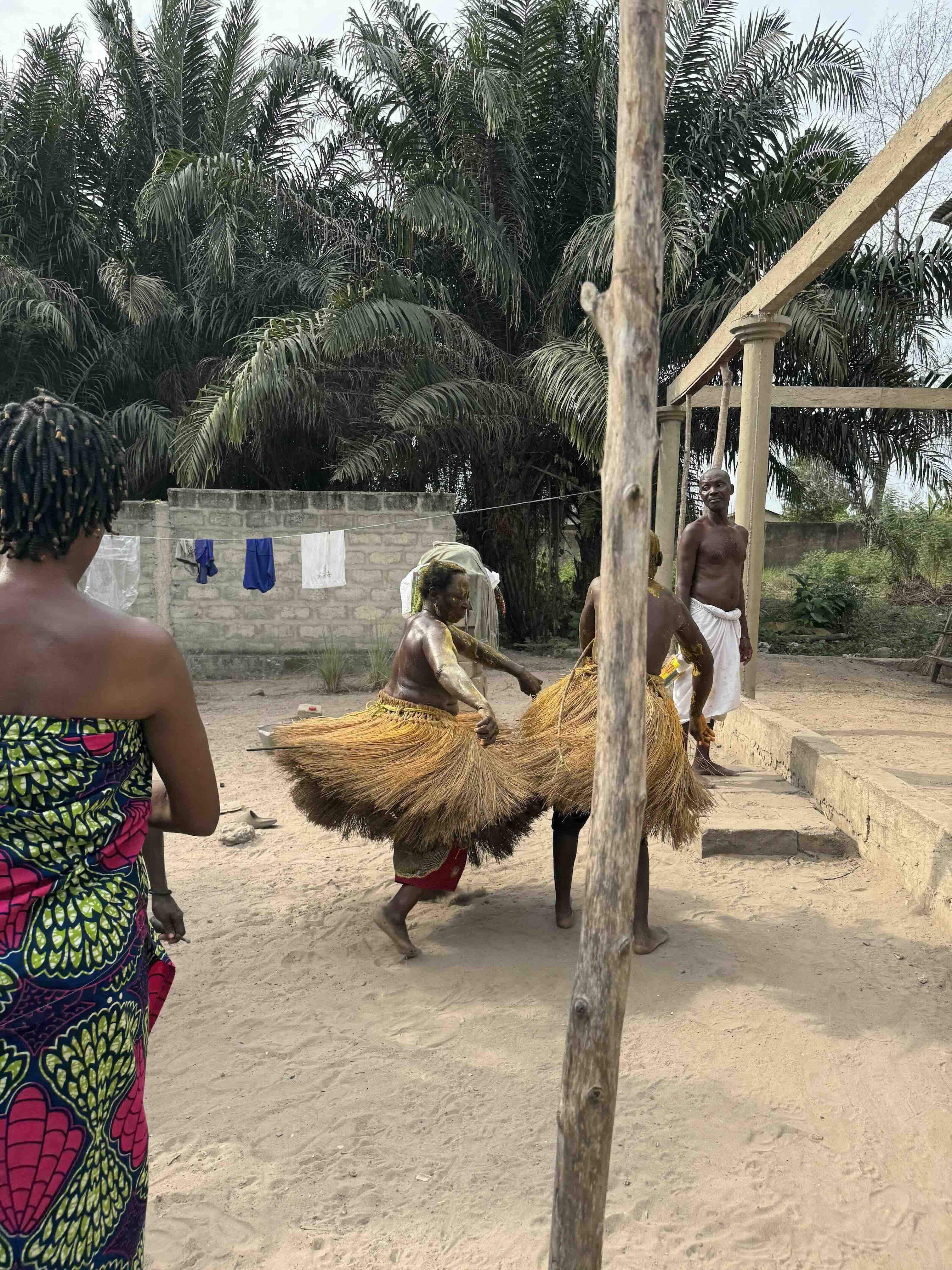 Two Vodun practitioners performing a traditional dance outside a family home in a village near Ouidah during the Vodun Festival.
Whether or not one shares the beliefs associated with Vodun, the festival offers a rare opportunity to better understand a tradition that has profoundly influenced the history and culture of West Africa and its diaspora. Like visiting a cathedral, a mosque, or a temple, attending the festival does not require participation in the faith—it simply requires curiosity, openness, and respect.
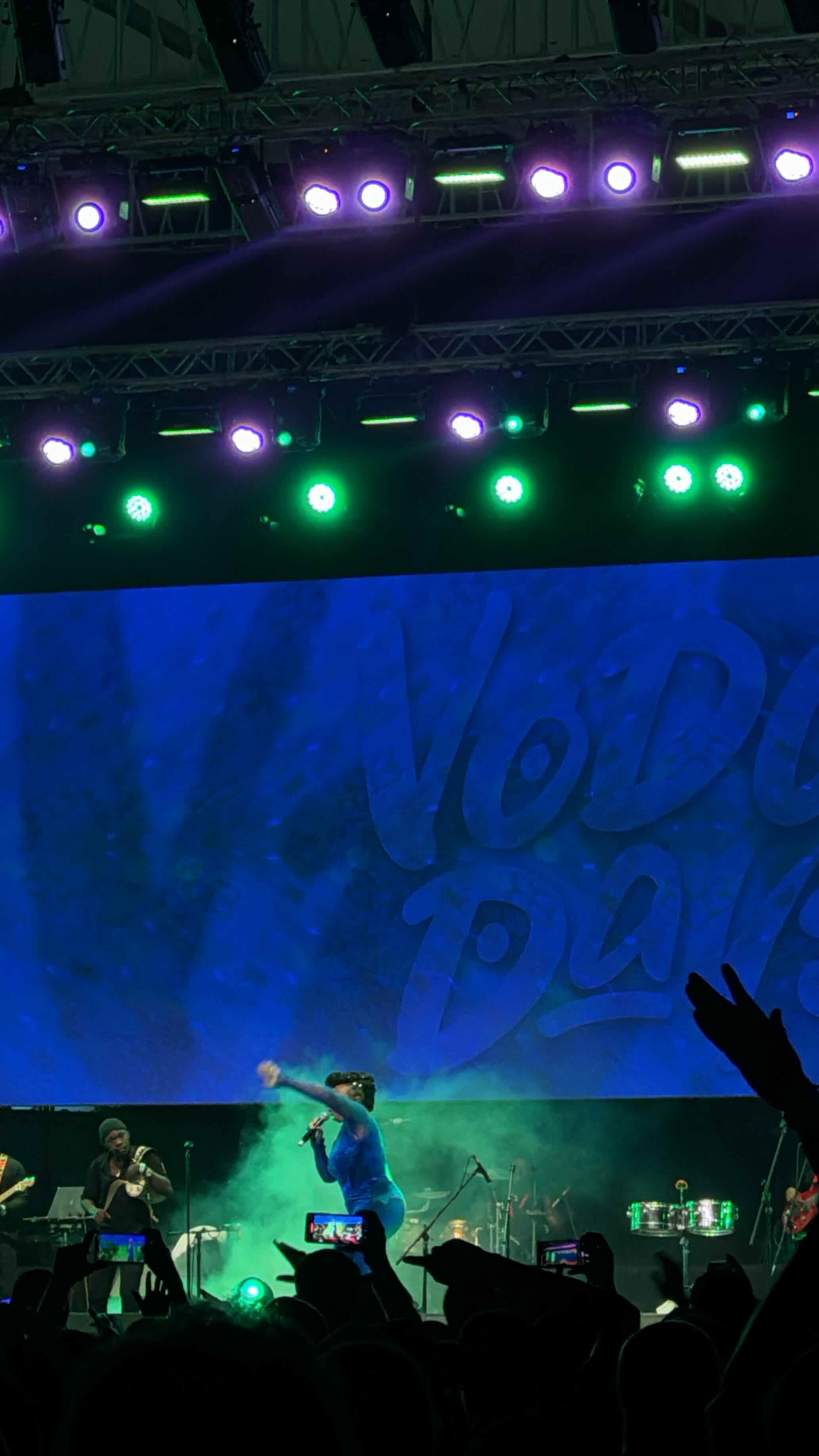 Yemi Alade performing during the evening celebrations of the Vodun Festival in Ouidah, Benin.
The Vodun Festival is not confined to its ceremonial traditions. As the sun sets each evening, the celebrations continue with concerts that bring together audiences from around the world. International artists such as Ciara, Davido, Yemi Alade, and Angélique Kidjo have graced the festival stage, reflecting the festival's unique ability to honour the past while celebrating the vibrancy of contemporary African culture.
Presented below is a selection of photographs captured during the Vodun Festival, offering a glimpse into the celebrations, ceremonies, and everyday moments that define the experience.
-
A selection of photographs from the Vodun Festival, presented in no particular order.
-
Contact & Information
For questions about the 2027 Vodun Festival Experience, applications, payments, or travel arrangements, please contact us.
Art Continum
Ouidah, Benin • 6–9 January 2027
Email: travel@artcontinum.com
Website: www.artcontinum.comArt Continum is an initiative of Akari Group LLC.
© 2026 Akari Group LLC. All rights reserved. Programme details are subject to change based on local conditions, official festival programming, availability, and operational requirements.


